Showing posts with label Angelica Ramirez. Show all posts

Monday, December 19, 2011

Godard et Rohmer: Four Moral Tales

As a self-proclaimed Maoist in the 60's, Godard in many, if not all, of his films touches on politics and encourages the viewer to ask him or herself questions relevant to contemporary political issues. Although politics is a conspicuous topic in many of his films, gender and morality always seems to have an undercurrent theme throughout the course of his work. Godard’s contemporary however touches on these subjects rather overtly. Eric Rohmer author and director of Six Moral Tales, is one of Godard’s French New Wave comrades, and two of his films that heavily carry the theme of morality, Ma Nuit Chez Maud and La Collectionneuse, share several similarities to Godard’s A Woman is a Woman and Vivre sa Vie.


Angela, Maud, Nana, and Haydeé are all judged by their male counterparts for stepping out of what is considered to be the social norms.  They are promiscuous, coquettish and they challenge the traditional female role and the hegemonic male structure; for these reasons, the men in their lives share a love-hate relationship with them. 
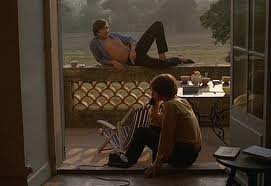


Rohmer literates his films, while Godard builds his films with imagery. The correlation of the two helps to define the French New Wave.

-ar

Monday, December 12, 2011

Spectacle and Montage

The Spectacle for Guy Debord is the incessant propaganda of images that sell capitalism; it is a "worldview that has been materialized." An inconspicuous separation between reality and image is inherent to everyone. For Debord, the capitalist system thrives on keeping the masses in an obscure and an indefinable reality. 


The media becomes an integral part of communication. And this communication is seldom carried out without media, according to Debord. People communicate on the basis of film, and music rather than of the person, meaning people communicate through the spectacle.

These never-ending images that foretell our decisions and opinions in Debord's Society of the Spectacle, may also be compared to Godard's use of montage, images that inform and foretell without actually telling us what to believe, but showing us what to believe. In his later films especially, Godard guides the viewer through an interweaving experience compounded with images that create a definition for the "narration". 

Debord's Spectacle of semiology and Godard's use of Montage both have enticing tactics, which have the ability to attract and manipulate the voyeuristic eye.

-ar

Wednesday, December 7, 2011

Rancière, Kierkegaard, Heraclitus and Godard


“Knowledge is not intelligence.” Heraclitus

The separation and/or difference between teacher and student have been discussed by philosophers aplenty.

Rancière discusses intelligence equality, the distribution of the sensible, and social emancipation. He pursues an interrelation between art and the proletariat and effectively attracts the distinction between knowledge and intelligence while abolishing the hierarchy between teacher and student. For Rancière intelligence is equal for all. People can equally gain intelligence by defining and recognizing signs. Everyone has the same potential of gaining intelligence. The schoolmaster is ignorant if he believes inequality of intelligence to be inherent.
Kierkegaard makes a similar argument in describing the essence of the teacher as a learner. “To be a teacher does not mean simply to affirm that such a thing is so, or to deliver a lecture, etc. No, to be a teacher in the right sense is to be a learner.” The Point of View for My Work as an Author (1848).

In addition, Heraclitus wrote in 5th century BC “Let us therefore notice that understanding is common to all men.  Understanding is common to all, yet each man acts as if his intelligence were private and all his own.” This quote may be easily compared to Rancière’s 2009 quote “He does not teach his pupils his knowledge, but orders them to venture into the forest of things and signs, to say what they have seen and what they think of what they have seen, to verify it and have it verified.”

There seems to be a similar philosophy amongst Ancient Greece to 19th Century Denmark to Modern-day France, where intelligence is on an equal playing field and all are capable of accessing it.  Godard, however, challenges this idea. As a Maoist, Godard is in favor of the proletariat. However his art attracts the educated because his references are literary as well as philosophical and this can isolate the worker. A differentiation exists in the way these philosophers describe intelligence and Godard’s exclusivity. Intelligence may be equal, yet Godard’s oeuvre contests this philosophy.

-ar

Monday, November 28, 2011

Alphaville: Love and Poetry


Godard’s Alphaville is a concoction of love and technology, poetry and science.

In a city that is governed by an evil scientist, those who experience love, or grief, or even read poetry are sentenced to death. A tragic scene suffused with endless murder and beautiful synchronized swimmers, is displayed very matter-of-factly. The insouciance attitude in the characters is genuine to Alphaville on account of the inhuman sensitivity that everyone in this city is to attain. This scene specifically demonstrates the interrelation between evil and poetry that is prominent throughout the film.


Alphaville, the city where love is obsolete, technology plays the leading role. Ironically Alphaville is fluid with romanticism and despair that is easily interpreted by the over-sexualized women in this city. And it isn’t hard to predict that it is through the pursuit of love that Alphaville’s regime is eradicated.

Anna Karina, who plays the evil scientists’ daughter, maneuvers her way into the heart of an “outsider”, a journalist who has come to save its citizens from the Alpha 60 dictatorship. Here, with a touch of passion and courage, the journalist who also claims to stand for justice, hunts and kills the scientist while consequentially destroying Alphaville itself.


In a city that is entranced with apathy and dispassion, the film is flooded with love and poetry. From the opening quote by Borges: “Sometimes reality is too complex for oral communication. But legend embodies it in a form which enables it to spread all over the world”, to Anna Karina reading a love poem from Éluard’s Capital of Pain, Godard weaves love and poetry in and out in this hollow-robotic city.  For the protagonist, poetry turns darkness into light, and in the end, only those who love survive.


-ar

Monday, November 7, 2011

Reflections

In Godard’s Masculin Féminin, the center of the world for Paul is ‘love’ while the center of the world for Madeleine is ‘self’. In the end, self conquers love. With the demise of Paul, and Madeleine experimenting with her sexuality as her singing career thrives, the film does not illustrate any male or female preference but simply an illustration of 60’s Parisian youth. 

As in Vivre sa Vie, the film experiments with existentialism. Madeleine is in control of her life and seems to increasingly have a grip of the people and situations around her. As her life progresses in confidence, Paul’s life reaches a point of desperation because of his dependency to be driven solely by Madeleine’s love. 


 Merleau- Ponty explains in Sens et Non-Sens, “The new psychology has revealed man to us not as an understanding which constructs the world but as a being thrown into the world and attached to it by a natural bond.” Madeleine’s continuous use of the mirror, as it is displayed in the opening scene as well as in the ten-minute bathroom scene, may symbolize superficiality and narcissism. However, it can de argued that Godard was determining existential ideas and effectively reversing the gaze from the spectator to the protagonist herself.

We discover Madeleine by an examination of her exterior, her experiences, her pop star mode and peppiness against the somber, crazed, and troublesome world of Paul. Eventually the life-making decisions that Madeleine is subjected to in the end of the film give her an equal amount of severity as we may have already conspicuously seen in Paul.


Madeleine, just like all the characters in the film, is victimized and is subject to the modern world, a world of war, sexual freedom, and pop-culture.  Although Godard portrayed a clear distinction in the male and female partiality of thoughts and attitudes, I argue that both masculine and feminine characters share an equal amount of profundity and experience that is sincere to their time.

ar